
Why Commercial Landscaping Bed Maintenance Matters for a Cleaner, More Professional Property

For upscale commercial properties, private communities, HOA entrances, estate-style residential developments, medical offices, retail centers, and hospitality spaces across the Kansas City area, bed maintenance is not a small detail. It is one of the clearest visual signals that your property is professionally managed.
Commercial landscaping shapes the first impression long before anyone steps through the door. The beds around your entrances, signage, walkways, patios, courtyards, and gathering spaces tell people what kind of property they are visiting. Clean, defined, well-maintained beds signal care, consistency, and a higher standard. Overgrown shrubs, thin mulch, weeds, and tired plantings send the opposite message.
Hermes Landscaping provides commercial landscaping services across Shawnee, Lenexa, and the Kansas City metro, with commercial maintenance, construction, snow and ice management, residential services, irrigation, seasonal color, and full-scale landscape support. Their commercial maintenance approach is built around consistency, performance, and long-term results for properties in Kansas and Missouri.
In this region, your landscape beds work hard. Kansas City properties deal with clay-heavy soils, spring storms, humid summers, hot pavement edges, freeze-thaw cycles, wind exposure, winter salt, and unpredictable seasonal swings. A bed that looks sharp in April may look neglected by July without proper care. A property that feels refined in September may look messy by November if leaves, spent plant material, and faded seasonal color stay too long.
Related: Commercial Landscape Maintenance for Beauty That Lasts, Not Just a Mowed Property
What Is Commercial Landscape Maintenance?
Commercial landscape maintenance is the ongoing professional care that keeps a property clean, healthy, safe, and aligned with the standard people expect when they arrive. It includes turf care, pruning, mulch, seasonal color, irrigation monitoring, edging, weed control, plant health care, debris removal, fall cleanup, snow coordination, and bed maintenance.
This work goes far beyond mowing. A commercial property has many living systems working together. Turf needs one rhythm. Shrubs need another. Seasonal color needs timely rotation. Irrigation needs monitoring. Trees need observation after storms. Landscape beds need frequent attention because they sit close to entrances, signs, walkways, windows, and high-traffic gathering areas.
When your beds look clean, your entire property feels more intentional. When they look ignored, the building, brand, neighborhood, or community entrance takes the hit. People may not know exactly what feels off. They simply sense that the property lacks care.
For affluent homeowners in private communities, board members, property managers, business owners, and developers, that level of care protects the everyday experience of the property. It gives residents, guests, tenants, and customers a stronger sense of arrival.
What Is Bed Maintenance In Landscaping?
Bed maintenance in landscaping is the detailed care of planted areas, mulch beds, shrub groupings, tree rings, perennial beds, seasonal displays, and entry plantings. It keeps these areas clean, healthy, defined, and visually connected to the rest of the property.
Commercial bed maintenance usually includes weed removal, bed edging, mulch refreshes, pruning, perennial care, seasonal flower maintenance, deadheading, debris removal, leaf cleanup, plant health checks, irrigation observation, and recommendations for declining plant material.
Our landscapers do not treat every bed the same. A shaded courtyard bed behind a luxury clubhouse needs different attention than a sun-baked monument sign bed beside a parking lot. A planting area near a sidewalk may deal with foot traffic, salt runoff, and reflected heat. A bed near a water feature may need different plant selections and moisture monitoring.
Good bed maintenance protects the design intent. Edges stay crisp. Mulch stays fresh. Shrubs stay scaled to the space. Annuals stay vibrant. Perennials stay tidy. Leaves and debris do not collect around the base of plants. Weeds do not steal the show.
Clean Beds Change the Way People Read Your Property
People judge a property quickly. They notice the drive in. They notice the entrance. They notice the walkway. They notice the planting beds around the sign. They notice the courtyard where residents gather, the beds around the leasing office, and the landscape outside the main doors.
Clean beds create confidence. They tell people the property is cared for, managed, and held to a higher standard. That matters for commercial buildings, luxury residential communities, private estates with shared spaces, office properties, schools, medical campuses, and retail environments.
The reverse is also true. Weeds near a sign look careless. Mulch washed across a sidewalk looks sloppy. Shrubs blocking windows look unmanaged. Dead annuals near an entrance look forgotten. Overgrown grasses leaning into a walkway make the whole space feel unrefined.
Commercial bed maintenance keeps that message clear. Your property looks managed because it is managed. It looks professional because trained crews maintain it with purpose. It looks high-end because the details match the standard of the building, community, or outdoor environment.
Kansas City Weather Makes Bed Maintenance More Important
Kansas City landscapes need local expertise. A maintenance schedule copied from another region will not hold up here. The metro sits in a climate with hot summers, cold winters, heavy spring rain, humid growing seasons, and regular freeze-thaw cycles.
Those swings affect every commercial landscape bed. Spring rain encourages fast weed growth and mulch movement. Heavy storms wash exposed soil into sidewalks and parking areas. Clay soils hold water after rain, then harden during dry stretches. Summer heat stresses annuals, young shrubs, and shallow-rooted plantings.
Fall leaf drop creates another layer of maintenance, especially on properties with mature canopy trees. Winter brings snow piles, salt exposure, wind burn, and frozen ground. Beds near parking lots, sidewalks, drives, and entrances take the hardest hit because they often sit close to snow storage areas and deicing materials.
A luxury property should not look strong for one month and tired for the next three. Professional maintenance keeps the site steady through Kansas City’s unpredictable weather.
Spring and Summer Bed Care
Spring bed maintenance prepares the property for the growing season. Crews remove debris, redefine edges, cut back remaining perennial material, assess winter damage, and refresh mulch. This is also the season when weeds move fast, especially after several warm days and steady rain.
Summer maintenance focuses on weed control, selective pruning, irrigation observation, seasonal color care, and heat stress. Beds near pavement need special attention because reflected heat dries soil quickly and pushes annuals, perennials, and shrubs harder than shaded planting areas.
Fall and Winter Bed Care
Fall maintenance removes leaves, cuts back selected plantings, prepares beds for winter, and keeps entrances clean as the season shifts. This is also a smart time to review plant performance and identify shrubs, grasses, or perennials that need replacement during the next planting window.
Winter planning protects beds near walks, drives, and parking areas. Snow operations, salt exposure, and freeze-thaw movement all affect plant health and bed definition. Our experts account for those seasonal pressures before they create bigger issues.
Materials Matter in Commercial Bed Maintenance
The materials used in your landscape beds influence appearance, plant health, and long-term maintenance needs. Mulch, edging, soil amendments, stone, and plant supports all affect how clean the property looks and how well the beds perform.
Mulch
Mulch is one of the most important materials in commercial bed maintenance. A fresh mulch layer gives beds a clean, finished look, but it also performs real work. It moderates soil temperature, retains moisture, reduces weed pressure, and protects roots during seasonal extremes.
In Kansas City, mulch depth and placement matter. Too little mulch leaves soil exposed and invites weeds. Too much mulch traps moisture and harms plant crowns. Mulch piled against tree trunks damages bark and root health. Our experts apply mulch with the plantings, drainage, slope, and bed conditions in mind.
Hardwood mulch works well for many commercial properties because it creates a refined, natural look and breaks down into the soil over time. Decorative rock has its place in specific settings, especially where washout or high traffic creates issues. Still, rock holds heat, so plant selection and exposure matter.
Soil and Edging Details
Many Kansas City properties have heavy clay soils. Clay holds nutrients, but it also compacts easily and drains slowly. Commercial beds may need soil amendments, compost, grading adjustments, or plant selections that tolerate the site conditions.
Edging also matters. Clean bed lines give the property definition, especially around entrances, monument signs, walks, and turf borders. Metal edging, natural stone borders, and clean spade-cut edges each have a place when selected for the right setting.
What Are The 5 Basic Elements Of Landscaping?
The five basic elements of landscaping are line, form, texture, color, and scale. Together, they shape how your property looks, feels, and functions.
1. Line
Line creates order and movement. It shows up in bed edges, walkways, shrub rows, entrance curves, and the way plantings guide the eye. Clean lines make a property feel intentional. Messy edges make it feel neglected.
2. Form
Form refers to the shape of plants and landscape features. Upright evergreens, rounded shrubs, arching grasses, low perennials, and spreading groundcovers all add structure. Strong form gives commercial beds interest beyond seasonal flowers.
3. Texture
Texture adds depth through ornamental grasses, broadleaf shrubs, mulch, stone, bark, and layered plantings. It keeps beds visually interesting without making them feel busy.
4. Color
Color brings energy through annual flowers, perennials, shrubs, foliage, bark, and seasonal changes. In commercial landscapes, color works best when it draws attention to entrances, signs, and high-visibility spaces.
5. Scale
Scale keeps the landscape proportionate. Plantings should fit the building, entrance, sign, walkway, and surrounding outdoor spaces without feeling too small, crowded, or overgrown.
Commercial bed maintenance protects all five elements after installation. Edging preserves line. Pruning maintains form. Cleanup protects texture. Seasonal rotations refresh color. Plant management keeps scale in check.
Design sets the standard. Maintenance keeps it looking sharp.
Related: How to Choose a Commercial Landscaping Contractor in Lenexa, KS, and the Greater Kansas City Area
Which Plants Are Good For Commercial Landscapes?
The best plants for commercial landscapes are regionally suited, dependable, appropriately scaled, and matched to the maintenance expectations of the property. Plantings for commercial properties need to look strong, tolerate real-world conditions, and contribute to the overall property experience.
In the Kansas City metro, plant selection needs to account for sun exposure, clay soil, heat, wind, irrigation access, snow storage, salt exposure, and seasonal temperature swings. A plant that looks great in a nursery may struggle if it lands in the wrong bed.
Quality Plant Options
Strong plant options may include switchgrass, little bluestem, prairie dropseed, feather reed grass, coneflower, black-eyed Susan, salvia, catmint, sedum, allium, daylily, hydrangea, spirea, viburnum, ninebark, boxwood, juniper, holly, yew, and other site-appropriate selections.
The plant list matters, but placement matters more. A shrub that looks good on installation day may block signage in three years. A perennial that performs well in a garden bed may flop across a commercial walkway. A thirsty annual display may struggle in a hot bed without reliable irrigation.
Ornamental Grasses and Native Plantings
Ornamental grasses often perform well in this region. They bring movement, texture, and seasonal interest without feeling overly formal. They also fit many commercial settings because they tolerate heat, wind, and open exposures when properly selected and established.
Native and regionally adapted plants also deserve attention. These plants often fit commercial settings because they suit the climate better than delicate selections that struggle through summer heat or winter exposure.
Our experts look at mature size, exposure, soil, drainage, foot traffic, visibility, snow zones, irrigation, and the property’s design intent before recommending plant material.
Seasonal Color Keeps Key Areas Fresh
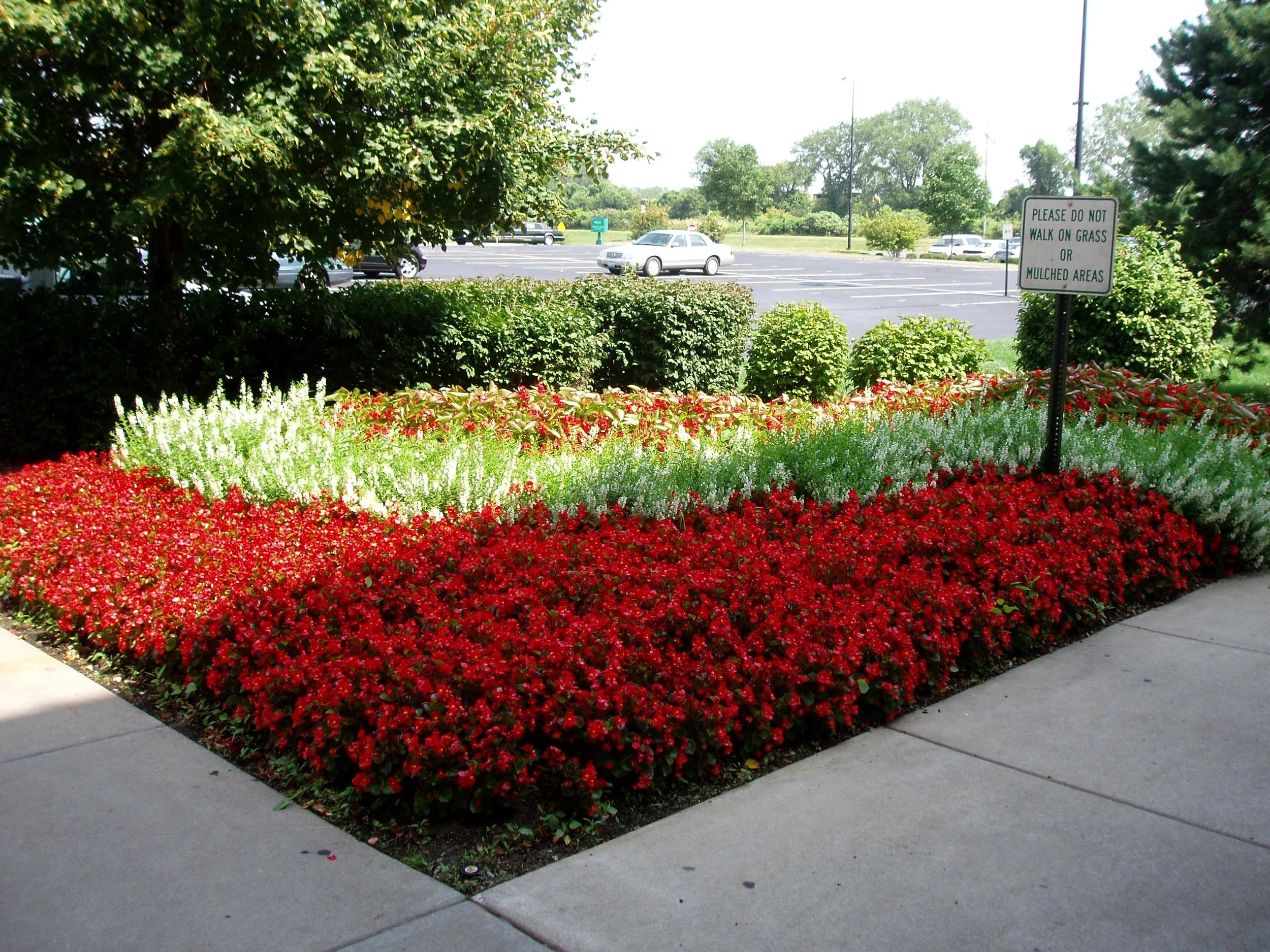
Seasonal color gives commercial beds personality. It brings energy to entrances, clubhouse areas, leasing offices, monument signs, patios, retail fronts, and guest arrival points.
In the Kansas City area, seasonal color must match the weather. Cool-season displays often use pansies, violas, mums, ornamental kale, and similar selections suited to spring and fall conditions. Warm-season displays need plants that tolerate heat, sun, and humidity, especially near pavement and reflective surfaces.
Timing matters. Tender annuals installed too early may suffer from late cold snaps. Summer color needs irrigation and consistent maintenance through heat. Fall displays need to arrive early enough to matter before the season shifts again.
The best commercial color programs look intentional, not random. Entrances deserve impact. Sign beds deserve clarity. Courtyards deserve warmth and personality. Large background beds often need stronger structure through shrubs, grasses, and mulch instead of relying too heavily on flowers.
How Often Do Commercial Beds Need Servicing?
Commercial beds usually need weekly or biweekly servicing during the growing season, with heavier seasonal work in spring and fall. High-visibility properties often need weekly attention because small issues show quickly around entrances, signs, and walkways.
The right frequency depends on property size, visibility, plant selection, mulch condition, irrigation, tree coverage, weed pressure, and the appearance standard expected. A property with mature trees may need more frequent fall cleanup. A retail property with heavy visitor traffic may need more frequent entrance bed servicing. A private community entrance with formal plantings may need detailed weekly attention through peak growth.
Spring service often includes debris removal, bed edging, mulch refresh, cutbacks, weed prevention, and plant health review. During summer, beds need weed control, selective pruning, seasonal color care, irrigation observation, and cleanup after storms.
Fall work includes leaf removal, bed cleanup, perennial cutbacks, seasonal color changeouts, and preparation for winter. Winter planning focuses on snow storage, salt exposure, and protection of vulnerable beds near pavement.
Commercial Bed Maintenance Protects Your Investment
Professional bed maintenance protects the resources already invested in the property. Landscape installations require planning, plant selection, soil preparation, irrigation, grading, mulch, and skilled installation. Without proper care, that investment declines.
Plants struggle. Mulch breaks down. Weeds compete. Edges disappear. Shrubs outgrow their space. Seasonal color loses impact. The property may still have quality materials and strong design bones, but the presentation begins to weaken.
Maintenance preserves the design intent and extends the useful life of the landscape. It also prevents small issues from becoming larger ones. A broken irrigation head caught early protects a bed from drought stress. A drainage concern noticed after a storm prevents washout. A shrub pruned at the right time avoids major corrective work later.
This is where experience pays off. Our experts notice the signs before they become obvious to everyone else. That level of attention keeps the property looking sharper and performing better through each season.
A Cleaner Property Starts With Better Bed Maintenance
Commercial bed maintenance is one of the most visible and valuable parts of a professional landscape program. It keeps your property clean, defined, healthy, and aligned with the standard people expect when they arrive.
It also creates excitement around the property. Not loud excitement. The better kind. The quiet confidence of walking up to a place that looks cared for, season after season.
For commercial properties, private communities, hospitality spaces, office campuses, and high-end outdoor environments in the Kansas City area, the beds deserve serious attention. They frame the arrival. They define the walkways. They support the architecture. They shape the experience.
When our landscapers maintain those beds with consistency, your property sends the right message every day: this place is cared for, this place is managed well, and this place holds a higher standard.
Schedule a bed maintenance check with our landscape experts to keep your property looking clean and professional.
Related: How Commercial Landscape Maintenance and Landscaping Services in Lee’s Summit, MO, Improve Seasonal Transitions
ABOUT THE COMPANY
John T. Hermes, our founder, was a man with a dream and a remarkable blend of business acumen and agricultural passion. After graduating from Oklahoma State University with a degree in Agriculture, he spent a decade in agriculture chemical sales and the military before founding Country Fair Lawns in 1965, which later became Hermes Landscaping. Despite his passing, his vision and passion continue to drive the Hermes team, inspiring them to uphold his legacy and commitment to excellence in the company's endeavors.